How to Write SMART Goals: Examples and Templates


TL;DR: A SMART goal is Specific, Measurable, Achievable, Relevant, and Time-bound. Use this formula: Increase [metric] from [baseline] to [target] by [deadline] by doing [1–3 key actions].
A SMART goal is a goal written with enough clarity that you can act on it, measure progress, and know when you're done. SMART stands for Specific, Measurable, Achievable, Relevant, and Time-bound.
This framework works for work goals, team projects, and personal development. Use it when you need to turn a vague intention ("get healthier," "grow revenue") into a target you can track weekly and finish by a deadline.
Here's a quick example:
-
Regular goal: "Improve customer onboarding."
-
SMART goal: "Increase onboarding completion from 60% to 80% by June 30 by simplifying the first-run checklist and adding a 3-email onboarding sequence."
Same intention. Now it's specific, measurable, and actionable.
In this guide, you'll get a simple method to write SMART goals in about 10 minutes, copy-and-paste templates, and real examples with common mistakes to avoid.
What SMART goals are: Definition and acronym
SMART is an acronym that ensures your goal has five essential components. The framework is commonly attributed to George T. Doran, who introduced it in a 1981 management paper.
|
Letter |
Stands For |
Key Question |
|---|---|---|
|
S |
Specific |
What exactly will change when you succeed? |
|
M |
Measurable |
What metric, milestone, or yes/no result will you track? |
|
A |
Achievable |
Can you hit this target with your current time and resources? |
|
R |
Relevant |
Does this goal support a priority that matters now? |
|
T |
Time-bound |
What is the deadline? |
Key terms defined
Baseline: The current value of your metric before you start — your starting point for measuring improvement.
Lever: The specific action or change that directly influences your metric.
Quick check: Is your goal actually SMART?
Read your goal and answer these five questions:
-
Can someone else understand exactly what success looks like?
-
Is there a clear metric or milestone to track progress?
-
Is the target realistic with your current capacity?
-
Does this goal support a real priority (not just activity)?
-
Is there a clear deadline?
If you can't answer one of these cleanly, your goal needs more detail.
How to write a SMART goal in 10 minutes (step-by-step)
Follow the same sequence each time. Start vague, then tighten. We'll use one example throughout: "Improve customer onboarding."
Step 1: Write the outcome in plain language
Before you touch metrics, define what "better" means. Ask: What should improve when you succeed?
Example: "More new users complete onboarding and reach activation."
Step 2: Make it specific (define scope)
Specific means you can point to exactly what is changing. Ask: What part of the process? Who does this apply to?
Upgrade: "Increase onboarding completion for new trial users."
Step 3: Choose the metric (and identify your baseline)
Pick one metric that represents success. Then capture where you are today.
Upgrade: "Onboarding completion rate (currently 60%)."
If you don't know the baseline, make it part of the goal: establish the baseline in week one.
Step 4: Set the target
Decide the result you're aiming for. Test achievability: Can you name the resources, time, and steps needed? If not, reduce the target by 20–30% or break it into milestones.
Upgrade: "Increase onboarding completion from 60% to 80%."
Step 5: Add the deadline
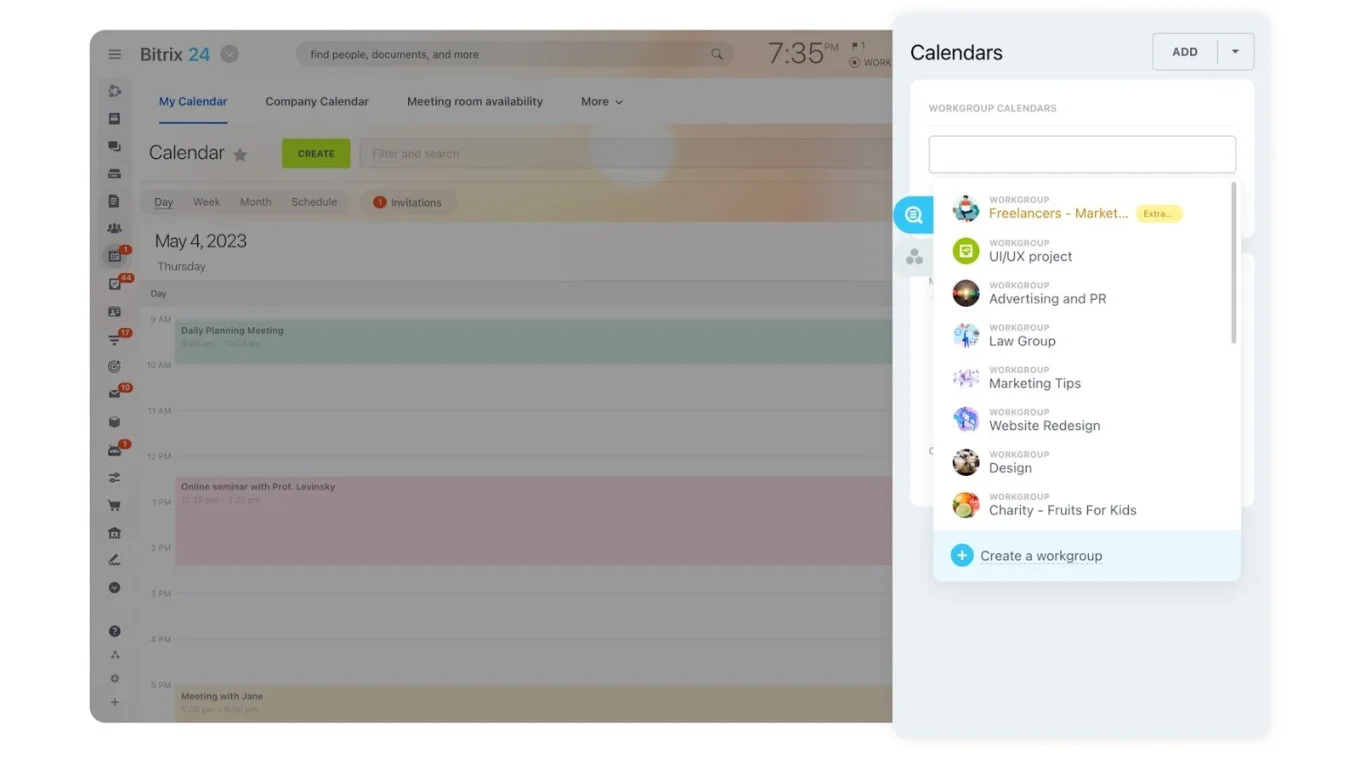
Time-bound gives your goal a finish line. Use a shared calendar to set deadlines with optional weekly or mid-point checkpoints.
Upgrade: "…by June 30, reviewed weekly."
Step 6: Name the 1–3 actions that will drive the metric
This is where goals become executable. A metric without a lever becomes wishful thinking.
Upgrade: "…by simplifying the first-run checklist and adding a 3-email onboarding sequence."
Step 7: Write the final SMART goal in one sentence
Increase onboarding completion for new trial users from 60% to 80% by June 30 by simplifying the first-run checklist and adding a 3-email onboarding sequence.
Increase [metric] from [baseline] to [target] by [deadline] by doing [1–3 key actions].

SMART goal templates (copy-and-paste kit)
Pick the format that fits your situation, fill in the blanks, and refine.
Template 1: Simple SMART goal
I will [specific outcome] measured by [metric] by [deadline].
Example: I will reduce overdue tasks by 25% by March 31.
Template 2: Baseline to target
Increase [metric] from [baseline] to [target] by [deadline].
Example: Increase lead-to-demo conversion from 3% to 4.5% by September 30.
Template 3: Outcome + actions
Achieve [outcome] measured by [metric] by [deadline] by doing [1–3 key actions].
Example: Increase qualified leads by 20% by June 30 by improving landing page conversion and launching two targeted campaigns.
Template 4: Team goal with ownership
Our team will [outcome] measured by [metric] by [deadline]. [Owner] is accountable. Key actions: [1–3 actions].
Example: Our team will reduce first response time from 6 hours to under 2 hours by July 31. The support lead is accountable.
Template 5: Milestones
I will [goal] by [deadline]. Milestones: By [date], complete [milestone 1]. By [date], complete [milestone 2].
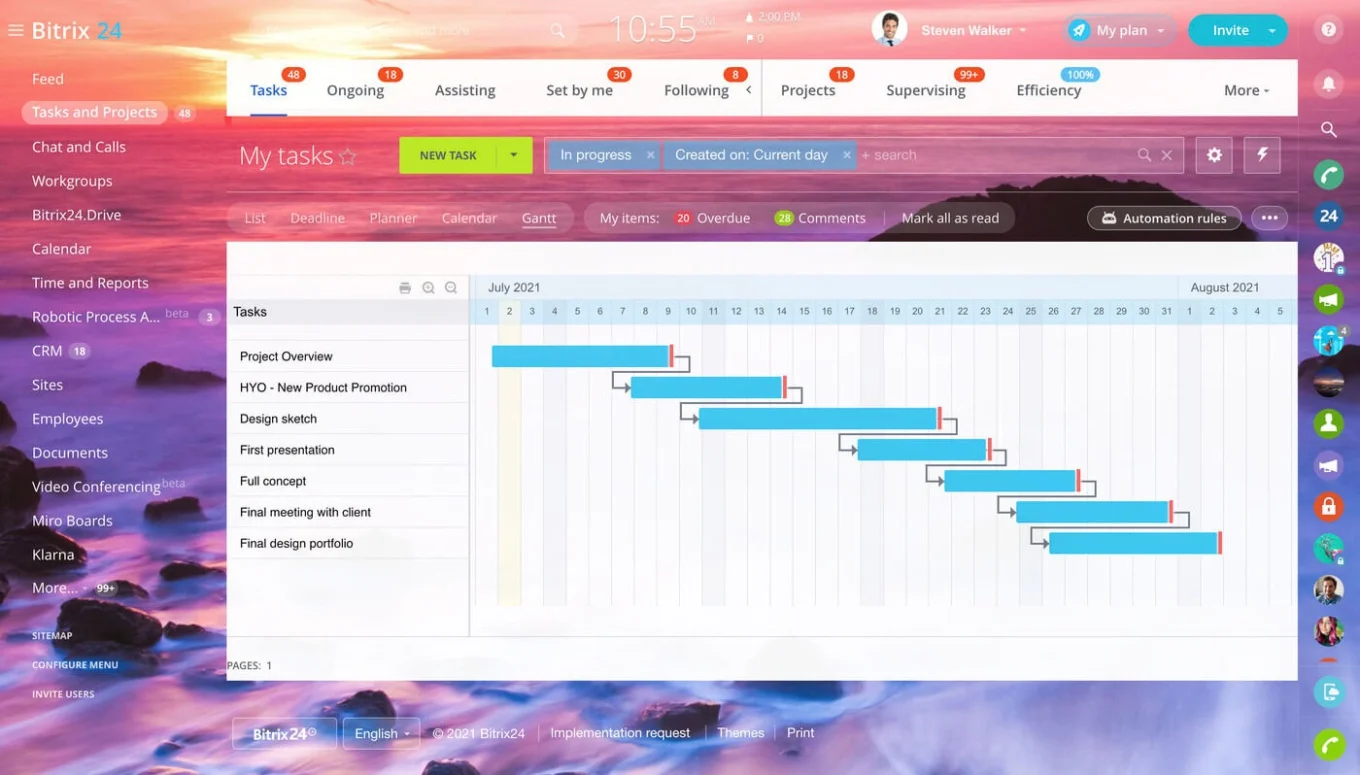
Example: Launch the new onboarding workflow by April 15. Milestones: March 10 finalize steps, March 25 test, April 5 train team. Use a Gantt chart to visualize dependencies.
Quick worksheet
-
Specific outcome: _______________________
-
Metric (baseline → target): _______________________
-
Deadline: _______________________
-
Key actions (1–3): _______________________
-
Owner (if a team goal): _______________________
SMART goal examples by category
Work performance
Productivity: Reduce overdue tasks by 25% by March 31 by running a weekly planning session and updating task status daily.
Quality: Reduce monthly reporting errors by 40% by June 30 by using a review checklist and adding second-person verification.
Team and project goals
Project delivery: Launch the new onboarding workflow by April 15 using project management tools to track milestones: scope by March 10, testing by March 25, training by April 5.
Stakeholder visibility: Reduce stakeholder "status update" requests by 50% by June 15 by sending a weekly update and maintaining a shared progress tracker.
Sales and marketing
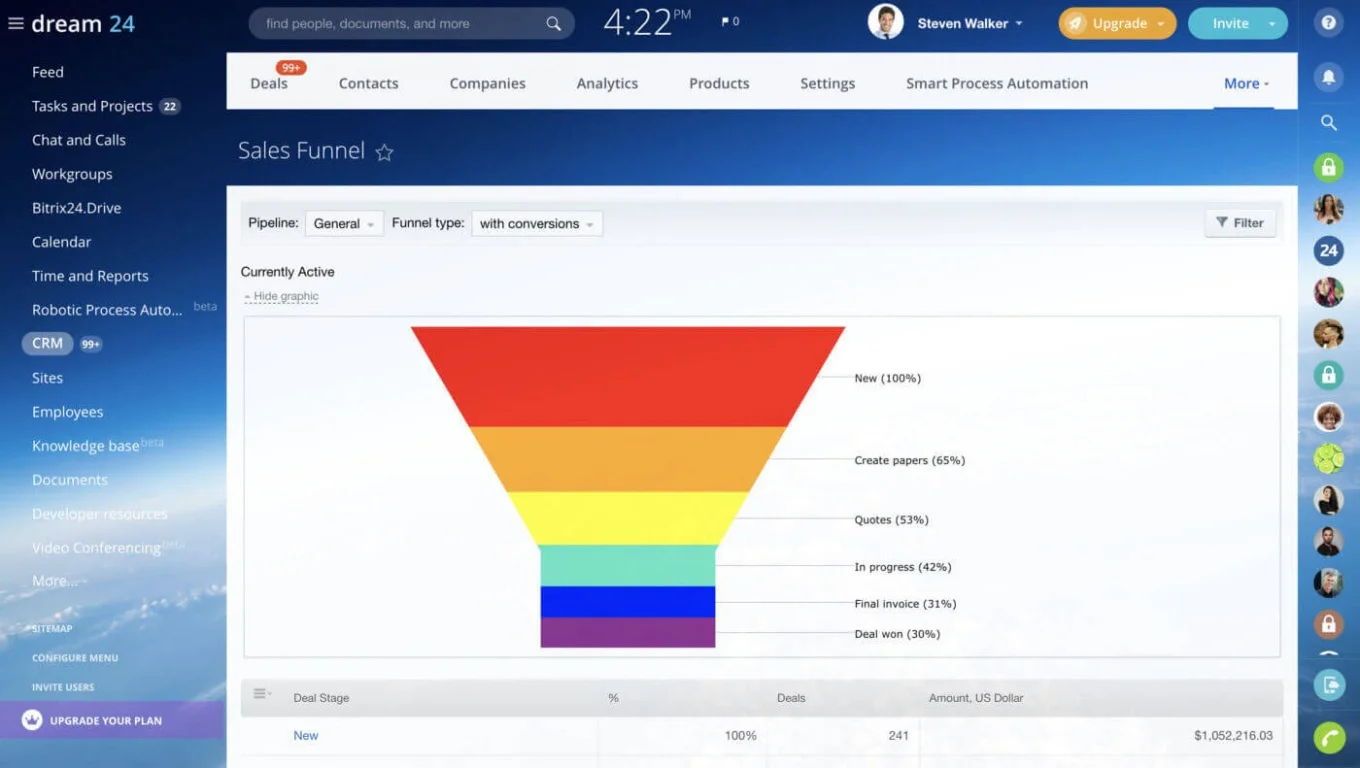
Conversion: Increase lead-to-demo conversion from 3% to 4.5% by September 30 by tightening qualification in your sales pipeline and reducing first response time to under 10 minutes.
Content growth: Increase organic traffic to product pages by 20% by June 30 by publishing two SEO articles per week and updating ten existing pages.
Personal development
Fitness: Exercise for 30 minutes at least 4 times per week for 8 weeks and reduce body weight by 3% by tracking workouts and meals.
Skill building: Complete an intermediate data analysis course by April 15 and build one reporting dashboard by May 15.
Common SMART goal mistakes (and quick fixes)
|
Mistake |
Weak Version |
Stronger Version |
|---|---|---|
|
Measurable but not specific |
"Increase revenue by 10% this quarter." |
"Increase new customer revenue by 10% this quarter by improving demo conversion." |
|
No baseline (unrealistic target) |
"Double lead volume in 30 days." |
"Increase lead volume from 200 to 240/month (+20%) in 60 days." |
|
Activity without outcome |
"Publish four blog posts per week." |
"Increase organic traffic by 20% by June 30 via two SEO articles/week." |
|
No tracking plan |
Set the goal, check it at month end. |
Review progress every Friday using the same dashboard. |
|
Deadline without milestones |
"Launch by May 31." |
"Launch by May 31. Scope by Apr 15, test by May 5, train by May 15." |
When SMART goals are not the best fit
SMART goals work best for targets with clear metrics and known levers. They're less useful when:
-
The goal is exploratory. Early-stage research or creative projects may need looser success criteria.
-
The environment changes fast. If priorities shift weekly, rigid quarterly targets create friction. Consider shorter goal cycles (2–4 weeks).
-
You don't control the outcome. Goals like "get promoted" depend on others' decisions. Focus SMART goals on inputs you control (e.g., "complete three portfolio projects by May 15").
-
Measurement is expensive or slow. If tracking costs more than the goal is worth, use a proxy metric.
In these cases, consider directional goals ("move toward X") or time-boxed experiments ("test Y for 2 weeks and evaluate").
Achieve more with Bitrix24!
Align your teams, track progress, and meet deadlines more efficiently with Bitrix24's integrated task management and analytics tools, used by 15 million users worldwide.
Start TodaySMART goals FAQ
What is a good SMART goal example?
A good SMART goal includes an outcome, a measurable target, a deadline, and the main actions. Example: Increase qualified leads by 20% by June 30 by improving landing page conversion and running two campaigns.
Who created SMART goals?
The SMART framework is commonly attributed to George T. Doran, who introduced it in a 1981 management paper. Some versions expand it to SMARTER (adding Evaluated and Reviewed).
What does "achievable" mean in SMART goals?
Achievable means the target is possible given your current time, resources, and constraints. If you can't explain why the target is possible, reduce it or add milestones.
Do SMART goals work for teams or only individuals?
Both. For team goals, add an owner and shared tracking.
Can SMART goals be long-term?
Yes. Use monthly or quarterly checkpoints to track progress and adjust early.
What is the difference between SMART goals and OKRs?
SMART is a goal-writing format. OKRs are an alignment framework (objective + measurable key results). Many teams write key results in SMART format.
How many SMART goals should you set at once?
Research suggests 1–3 active goals maximize focus. Beyond 5, completion rates drop significantly.
How often should you review SMART goals?
Weekly for short-term goals (under 90 days). Monthly or quarterly for long-term goals.
Can a SMART goal change after you set it?
Yes. If your baseline shifts or priorities change, update the target or deadline.
What's the difference between "achievable" and "realistic"?
They're interchangeable. Both mean the target is possible given your constraints.

Conclusion: Turn SMART goals into results
SMART goals work because they make success clear and progress measurable.
To apply this right away:
-
Pick one outcome that matters
-
Choose one metric (baseline → target)
-
Set a deadline with checkpoints
-
Define the 1–3 actions that will move the metric
-
Review progress weekly and adjust early
If your goal involves multiple tasks, owners, and deadlines, make sure it lives in the same system your team uses every day. When goals stay visible through task automation and tied to real work, follow-through becomes easier.
Bitrix24 gives you the tools to set, track, and achieve your SMART goals: calendars, task management, Gantt charts, and built-in analytics all in one place. Trusted by 15 million users to keep work organised and execution on track. Start for free today.