SmartSuite Alternatives: Mature Work Management Platforms for Enterprise Operations


If you're researching SmartSuite alternatives, you're likely evaluating work management platforms for company-wide operational use – not just task tracking.
SmartSuite has gained attention as a flexible work management startup offering customizable workflows and database-style organization. For many teams, it's an intriguing option.
But for operations leaders and PMO teams in mid-size companies (100–500 employees), the evaluation criteria are different.
You're not just asking: “Can this manage tasks?” – you're asking questions like:
- Can this scale across departments?
- Will this vendor still be around in 5–10 years?
- Does it integrate with our existing enterprise systems?
- Can it replace more than just project management software?
- Is this secure enough for company-wide deployment?
This guide compares the best alternatives to SmartSuite, focusing on enterprise maturity, integration capabilities, and full-stack operational coverage.
Why Operations Teams Look Beyond SmartSuite
SmartSuite positions itself as a modern, flexible work management tool. For small teams experimenting with structured workflows, it may be sufficient. However, enterprise operations teams often encounter limitations during evaluation.
Platform Maturity Considerations
One of the primary concerns for mid-size and enterprise companies is vendor maturity. SmartSuite is a relatively new entrant in the market. While innovation is attractive, enterprise deployment requires:
- Long-term roadmap stability
- Proven scalability
- Large customer base validation
- Enterprise case studies
- Financial durability
Operations leaders must think in multi-year cycles. Migrating hundreds of employees to a new system is expensive and disruptive. If the vendor pivots, is acquired, or fails to scale support infrastructure, the organization carries the risk.
For companies responsible for:
- Compliance oversight
- Cross-department governance
- Data management standards
- Security audits
Vendor stability is not optional – it's foundational. When evaluating SmartSuite alternatives, maturity and track record become critical differentiators.
Enterprise Integration Requirements
SmartSuite offers integrations, but many enterprise teams require deeper ecosystem connectivity. Mid-size companies often operate with:
- SAP or Oracle systems
- Salesforce
- Legacy ERP platforms
- HRIS tools
- Internal databases
- Custom-built applications
A work management platform that cannot integrate seamlessly with enterprise systems quickly becomes siloed. Operations leaders need:
- Robust REST APIs
- Webhooks
- Marketplace integrations
- Enterprise SSO
- Custom integration support
Without this, teams end up duplicating data across systems, creating governance headaches and increasing operational friction.
Beyond Work Management – Full Business Stack
SmartSuite focuses primarily on work management: tasks, processes, structured data, workflows, etc. But operations leaders increasingly seek consolidation instead of separate tools for every need:
- One platform for project management
- Another for CRM
- Another for HR
- Another for communication
- Another for documentation
The goal is unified operations. A modern operations management platform should ideally include:
- Enterprise project management
- CRM capabilities (if workflows span customers)
- HR tools
- Knowledge management
- Internal communication
- Automation across departments
SmartSuite may handle structured work. But it does not provide a mature, full-stack business environment. For organizations managing:
- Sales operations
- HR onboarding
- Compliance tracking
- IT change management
- Vendor approvals
- Customer-facing processes
Work management alone isn't enough.

Enterprise Requirements for Work Management
If you are leading operations or a PMO in a mid-size company, your evaluation checklist likely includes factors that go beyond features. Let's break down what truly matters at enterprise scale.
Vendor Stability and Track Record
Enterprise adoption is about risk mitigation. A mature platform should demonstrate:
- 10+ years in operation
- Millions of users or organizations
- Enterprise deployments
- Transparent roadmap
- Documented uptime reliability
Vendor maturity affects:
- Product continuity
- Support infrastructure
- Security posture
- Long-term pricing stability
Switching platforms every few years due to vendor instability is not viable at enterprise scale.
When evaluating SmartSuite alternatives, track record is a competitive advantage.
Integration Capabilities
Enterprise systems rarely operate in isolation. Look for:
- REST API access
- Webhooks
- Data export functionality
- Marketplace integrations
- Enterprise SSO
- SCIM provisioning
Integration depth determines whether the platform becomes your operational hub – or just another isolated tool.
For example:
- If your PMO platform cannot integrate with Salesforce, CRM-to-delivery workflows break.
- If HR onboarding tasks cannot sync with your directory system, compliance risks increase.
- If BI dashboards cannot export to executive reporting systems, leadership loses visibility.
Enterprise-ready platforms prioritize integration as a core capability – not an afterthought.
Security and Compliance
Security expectations for mid-size and enterprise companies include:
- SSO
- Two-factor authentication
- Audit logs
- Data encryption
- Role-based permissions
- Compliance certifications
- Data residency options
For regulated industries, these are mandatory. Additionally, some organizations require:
- Self-hosted deployment
- On-premise control
- Custom security reviews
Without an enterprise-grade security posture, company-wide deployment is unrealistic.
Top SmartSuite Alternatives for Operations
Now let's examine the strongest SmartSuite alternatives for mid-size companies seeking mature, full-stack operational platforms.
We'll prioritize enterprise maturity and broader business capabilities – not just project management features.
Bitrix24 – Best Full-Stack Enterprise Platform
Bitrix24 is not just a work management tool. It is a mature business platform launched in 2012 and trusted by over 15 million organizations worldwide.
For operations leaders evaluating risk, Bitrix24's longevity and scale immediately reduce vendor stability concerns. But maturity alone isn't the differentiator.
Bitrix24 offers the full package, which includes the following:
- Tasks & Projects
- CRM
- HR tools
- Communication suite
- Knowledge base
- Workflow automation
- BI Builder & reporting
- Sites and internal portals
- Self-hosted option
Work management is one module within a broader ecosystem.
Work Management (Tasks & Projects)
The Tasks & Projects module in Bitrix24 module includes:
- Kanban boards
- Gantt charts
- Task dependencies
- Workload management
- Templates
- Time tracking
- Scrum support
Unlike startup-focused tools, Bitrix24 integrates project management directly with CRM, HR, and communication modules.
This means:
- Sales deals can trigger project workflows
- HR onboarding tasks can connect to internal communication
- Approval chains can span departments
Learn more about Bitrix24 Tasks & Projects.
CRM Integration for Operational Workflows
Many operational processes intersect with customers:
- Implementation projects
- Service requests
- Contract renewals
- Compliance audits
Bitrix24 includes a fully built CRM module within the same system. This eliminates the need for external CRM integrations when operational processes depend on customer data.
Workflow Automation
Workflow automation in Bitrix24 allows custom business process automation across modules.
Examples:
- Automated approval chains
- Escalation triggers
- SLA enforcement
- Cross-team routing
- Conditional task creation
Operations leaders can design complex processes without relying heavily on external automation tools.
HR & Internal Operations
Bitrix24 includes HR capabilities such as:
- Employee directory
- Org chart
- Time tracking
- Absence management
For organizations managing internal compliance, onboarding, and workforce coordination, this consolidates systems.
Knowledge Base & Documentation
Operational excellence depends on documentation. Bitrix24 provides:
- Knowledge base
- SOP documentation
- Internal wiki
- Version control
Instead of using a separate documentation platform, teams centralize procedures inside the operational environment.
Communication Suite
Bitrix24 includes:
- Internal chat
- Video conferencing
- Announcements
- Company feed
Work management without communication integration often leads to fragmented collaboration. Bitrix24 solves this natively.
Enterprise Deployment Options
Bitrix24 offers:
- Extensive integration ecosystem
- REST API
- Webhooks
- Marketplace apps
- Enterprise solutions
- Self-hosted option
For organizations requiring full data control, the On-Premise version provides maximum flexibility.
Over 15 Million Organizations Trust Bitrix24 – Evaluate Free
Operations teams can deploy Bitrix24 across departments and evaluate functionality at scale before committing – try now.
While Bitrix24 positions itself as the strongest enterprise-ready full-stack platform, it's important to evaluate other major players in the work management and operations space. Each of the following platforms addresses a different operational philosophy.
Manage clients and sales with Bitrix24!
Manage leads, automate workflows, and close deals faster with an all-in-one Bitrix24 CRM. Free forever, unlimited users.
START NOW FREEMonday.com – Best for Visual Work Management
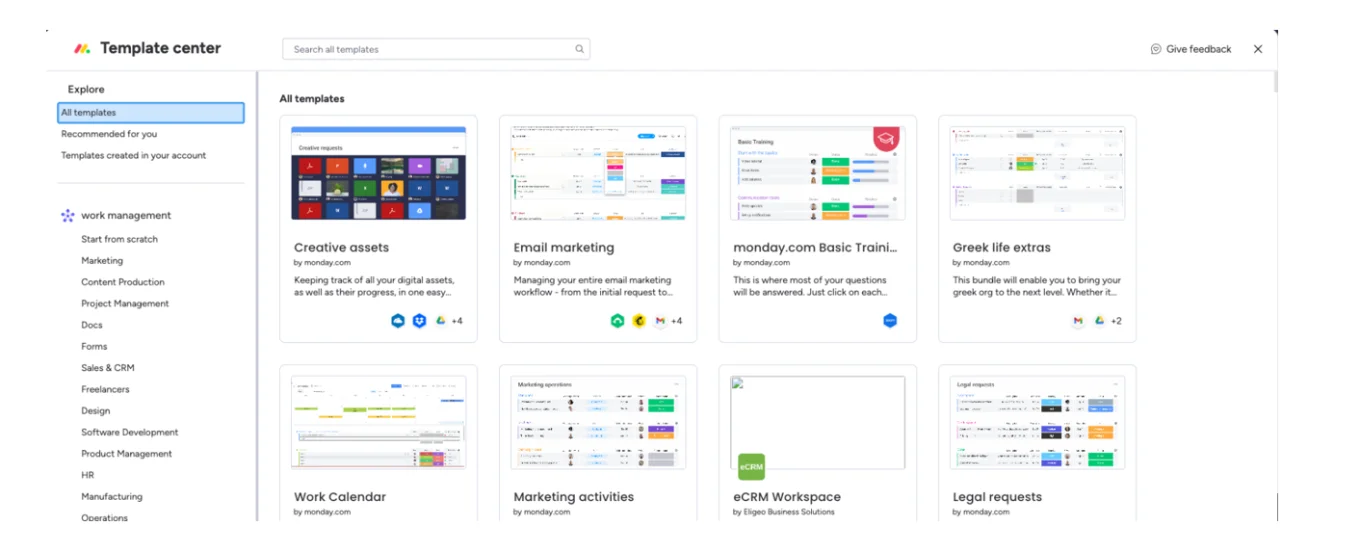
Monday.com has built its reputation on highly visual boards and approachable usability. For teams transitioning from spreadsheets to structured workflows, it often feels intuitive and flexible.
Strengths:
- Visual, color-coded boards
- Drag-and-drop interface
- Automation recipes
- Broad app marketplace
- Easy onboarding
Monday is especially strong for cross-functional collaboration in marketing, operations, and light PMO environments. Its visual dashboards make it easy for leadership to understand project status at a glance.
However, Monday.com remains primarily a work management platform. While it offers CRM and HR add-ons, these operate as separate products rather than a fully unified system.
Limitations for enterprise operations include:
- Per-user pricing scaling quickly
- Feature gating across pricing tiers
- Add-on stacking for CRM, Dev, Service, etc.
- No true self-hosted deployment
For organizations seeking a mature operations management platform that consolidates work management, CRM, HR, and communication in one core database, Monday may require additional systems.
Best for: Teams prioritizing visual project coordination over full-stack operational integration.
ClickUp – Best for Customization
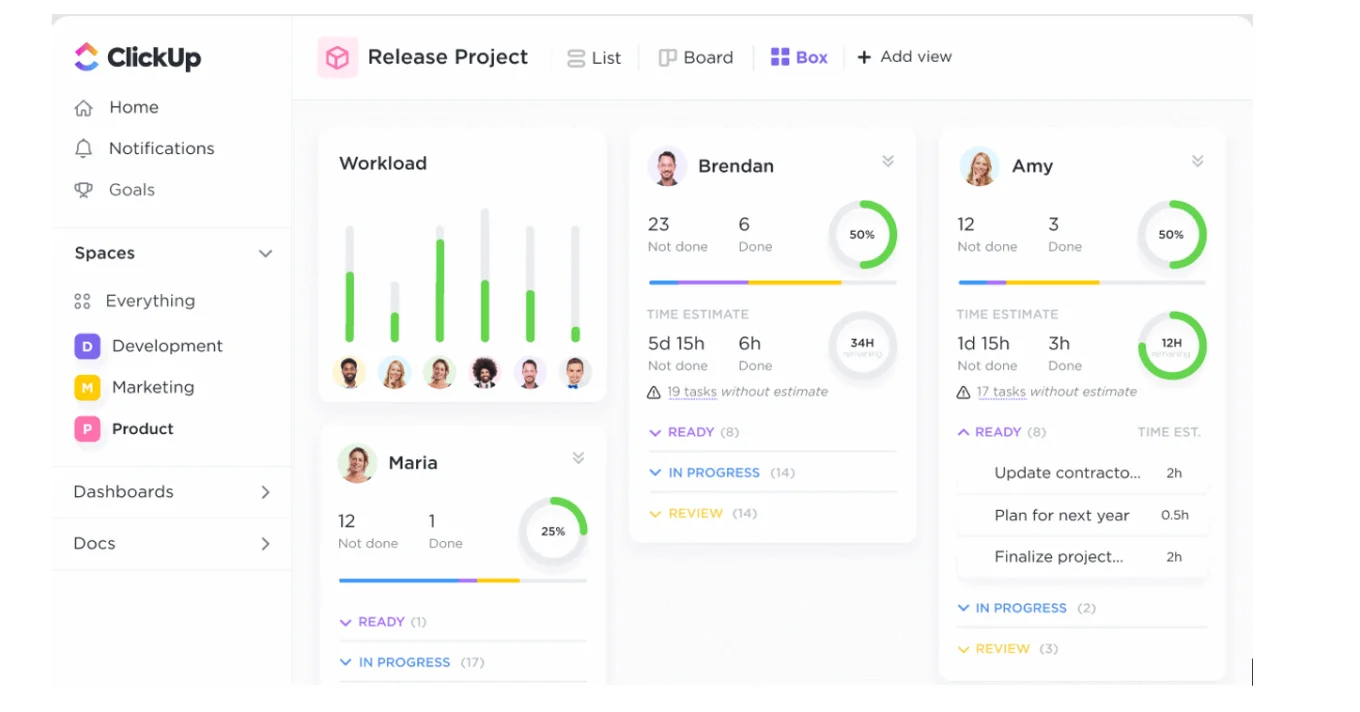
ClickUp positions itself as a highly customizable work management platform capable of replacing multiple tools.
Strengths:
- Deep customization
- Multiple project views
- Built-in docs
- Goal tracking
- Agile-friendly
ClickUp appeals to operations teams that want granular control over how workflows are structured. It offers task hierarchies, custom fields, dashboards, and workflow automation.
However, enterprise teams sometimes encounter:
- Complexity in configuration
- Steeper learning curve
- Rapid feature rollout leading to UX inconsistency
- Limited built-in CRM maturity compared to dedicated platforms
ClickUp is strong as a customizable work management system, but companies seeking enterprise-grade CRM, HR, and communication integration may still require additional tools.
Best for: Teams valuing flexibility and customization over platform consolidation.
Asana – Best for Project-Focused Teams
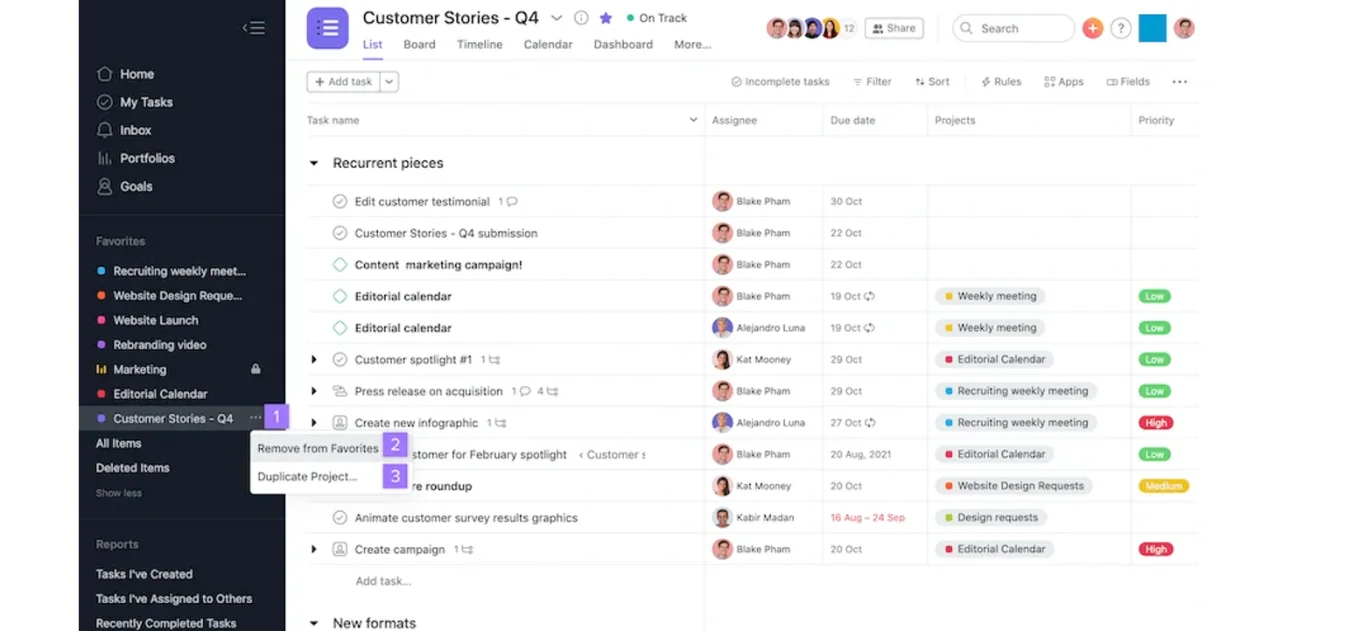
Asana is widely recognized in enterprise project management environments.
Strengths:
- Clean UX
- Strong task dependencies
- Portfolio management
- Enterprise security features
Asana excels at structured project execution. PMO leaders appreciate its reporting clarity and dependency tracking for large initiatives.
However, Asana is not a full business platform. It lacks:
- Native CRM
- Built-in HR capabilities
- Internal communication tools
- Comprehensive automation across business modules
For organizations seeking enterprise project management specifically, Asana is strong. But if the goal is company-wide operational consolidation, additional systems are required.
Best for: PMOs focused purely on project delivery rather than enterprise-wide integration.
Notion – Best for Documentation-Heavy Operations
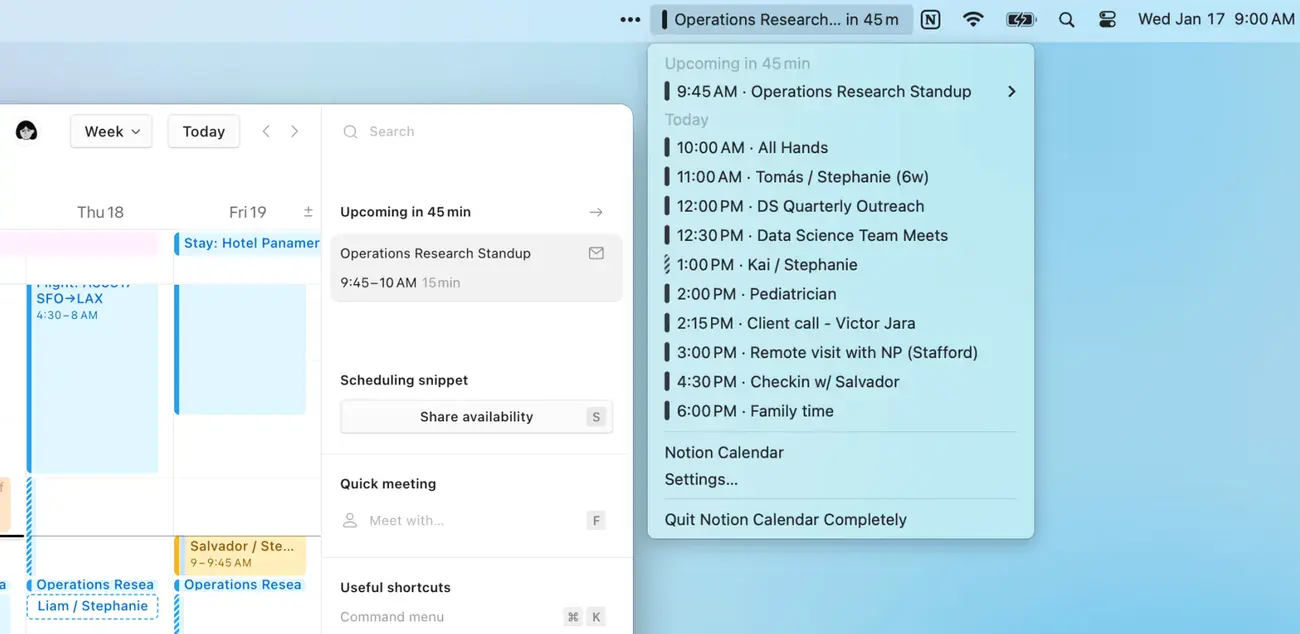
Notion has gained traction as an all-in-one workspace combining notes, documentation, and light databases.
Strengths:
- Flexible page structure
- Documentation and wiki strength
- Customizable databases
- Lightweight collaboration
Notion is excellent for knowledge management, SOP creation, and documentation-heavy teams.
However, it lacks depth in:
- Enterprise workflow automation
- CRM capabilities
- Formal project management features
- Enterprise compliance certifications
While Notion can support structured content workflows, it is not designed as a mature enterprise operations backbone.
Best for: Teams prioritizing documentation and internal knowledge sharing.
Airtable – Best for Database-Driven Workflows
Airtable bridges spreadsheets and databases with strong no-code capabilities.
Strengths:
- Database-first structure
- Strong custom field control
- Automation triggers
- Flexible table views
Airtable is popular among operations teams building custom internal tools without engineering resources.
However, enterprise gaps may include:
- Limited full-stack business modules
- No native CRM depth comparable to dedicated systems
- No built-in HR or communication suite
- Pricing scaling per user
Airtable excels as a customizable database platform but often requires significant configuration and integration to function as a full operational environment.
Best for: Teams building custom no-code workflows.
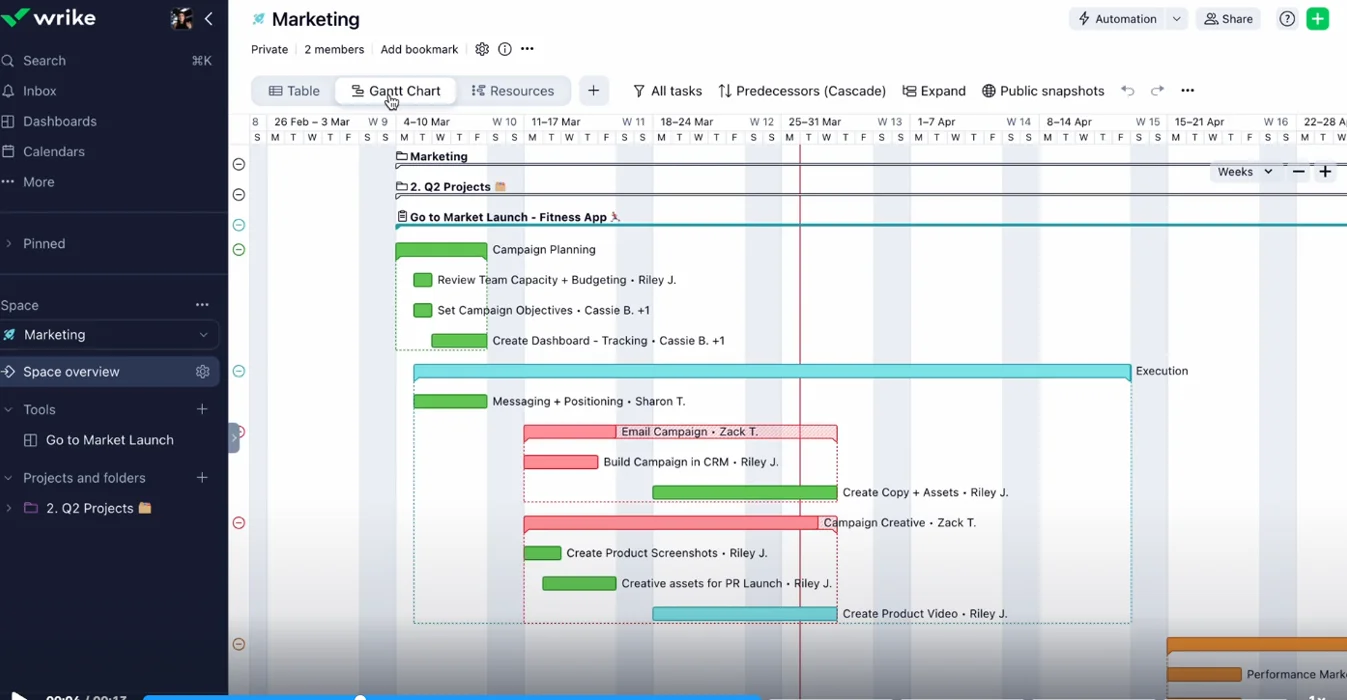
Wrike – Best for Enterprise PMO
Wrike has positioned itself firmly within enterprise PMO environments.
Strengths:
- Enterprise-grade security
- Portfolio management
- Resource planning
- Advanced reporting
Wrike is a serious contender for structured enterprise project management.
However, like many PM-focused platforms, it does not natively include:
- CRM
- HR tools
- Communication suite
- Company-wide automation across modules
For organizations seeking comprehensive operational consolidation, Wrike remains a project management tool rather than a business operating system.
Best for: Large enterprises focused primarily on structured project delivery.
Bitrix24 vs SmartSuite: Head-to-Head Comparison
Now let's directly compare Bitrix24 and SmartSuite across the criteria that matter most for mid-size enterprise operations.
Platform Maturity
SmartSuite:
- Newer market entrant
- Growing customer base
- Startup-stage roadmap evolution
Bitrix24:
- Established in 2012
- 15M+ organizations worldwide
- Proven enterprise deployments
- Mature product ecosystem
For risk-sensitive operations teams, vendor longevity matters.
Scope of Platform
SmartSuite:
- Work management focus
- Customizable workflows
- Limited broader business modules
Bitrix24:
- Work management
- CRM
- HR
- Communication
- Knowledge base
- Workflow automation
- BI Builder
- Sites and portals
Bitrix24 provides a full-stack operational ecosystem rather than a single-category tool.
Enterprise Integration
SmartSuite:
- Integrations available
- Growing ecosystem
Bitrix24:
- REST API
- Webhooks
- Marketplace
- Enterprise SSO
- Self-hosted option
- Data export capabilities
For companies integrating with SAP, Salesforce, or legacy systems, integration depth is critical.
Security & Deployment
SmartSuite:
- Cloud-based
- Standard SaaS security
Bitrix24:
- Enterprise security features
- Role-based permissions
- Audit logs
- Self-hosted option for maximum control
For organizations with strict compliance requirements, deployment flexibility is a major differentiator.
Comparison Table
|
Feature |
SmartSuite |
Bitrix24 |
|---|---|---|
|
Work Management |
Yes |
Yes |
|
CRM |
Limited |
Full CRM |
|
HR Module |
No |
Yes |
|
Communication Suite |
No |
Yes |
|
Knowledge Base |
Limited |
Yes |
|
Workflow Automation |
Yes |
Advanced, cross-module |
|
Enterprise Integrations |
Growing |
Extensive |
|
Self-Hosted Option |
No |
Yes |
|
Vendor Track Record |
Startup |
10+ Years |
|
Organizations Using Platform |
Growing |
15M+ |
The key takeaway
SmartSuite is a work management startup building outward. Bitrix24 is a mature business platform where work management is one capability among many – proven at a global scale.
Enterprise-Ready Work Management With Real Governance Controls
If your checklist includes SSO, RBAC, audit logs, data residency, and optional self-hosting, choose a platform built for operational governance — so PMO, HR, IT, and ops can run standardized workflows at scale.
START FREEFAQ
What are the best SmartSuite alternatives?
Top SmartSuite alternatives include Bitrix24, Monday.com, ClickUp, Asana, Airtable, Notion, and Wrike. The right choice depends on whether your priority is lightweight work tracking or a mature, enterprise-ready operational backbone.
If you’re primarily focused on visual task management, Monday.com or Asana may be suitable. If deep customization and flexible workflows are your priority, ClickUp or Airtable can offer strong no-code configuration. Documentation-heavy teams may lean toward Notion.
However, for organizations seeking more than work management – including CRM, HR, communication, and enterprise integrations – platforms like Bitrix24 provide a broader, full-stack approach. The key distinction is whether you need a task manager or a complete operations management platform.
Is SmartSuite enterprise-ready?
SmartSuite offers flexibility and strong workflow customization, but enterprise readiness goes beyond feature sets.
Enterprise deployment requires:
Organizations requiring self-hosted deployment, long-term vendor viability, and extensive integration ecosystems may evaluate more mature platforms. For mid-size companies managing sensitive data or regulated processes, vendor track record and infrastructure maturity often carry significant weight in the decision process.
Why choose Bitrix24 over SmartSuite?
Bitrix24 provides structural advantages for enterprise operations:
Unlike SmartSuite, where work management is the primary focus, Bitrix24 delivers a unified business environment. Work management is seamlessly connected to CRM pipelines, HR onboarding, internal communication, and analytics dashboards.
For operations leaders responsible for long-term system governance, Bitrix24 reduces vendor risk while enabling consolidation across departments.
Can Bitrix24 replace multiple operational tools?
Yes. Bitrix24 can consolidate:
By centralizing these capabilities into one platform, organizations reduce tool sprawl, eliminate redundant integrations, and improve data consistency across departments.
How does Bitrix24 support enterprise project management?
Bitrix24 includes advanced project management capabilities such as:
For PMOs overseeing multiple initiatives, Bitrix24 supports structured governance without requiring separate systems.
Does Bitrix24 integrate with existing enterprise systems?
Yes. Bitrix24 offers:
This ensures compatibility with ERP, CRM, HRIS, and legacy systems often present in mid-size companies.
What makes a strong SmartSuite alternative?
A strong alternative to SmartSuite should provide:
Work management is only one piece of operational excellence. The strongest platforms support the entire business ecosystem – not just task tracking.
Final Thoughts: Choose Maturity Over Experimentation
SmartSuite represents innovation in work management.
But enterprise operations require more than innovation.
They require:
- Stability
- Integration depth
- Security maturity
- Long-term vendor viability
- Full-stack operational coverage
If you're responsible for company-wide systems across 100–500 employees, your platform decision must stand the test of time.
15M+ Organizations Trust Bitrix24 – Evaluate Free
Work Management + CRM + HR in One Platform.
- Enterprise-ready
- Mature ecosystem
- Full-stack operational coverage
- Self-hosted option available
- Unlimited users on free plan
Explore Enterprise solutions, review integration capabilities, and request enterprise security documentation today. Your operations platform shouldn't just manage tasks. It should power your entire organization.