QC by Design: Automate supplier inspections before returns happen

Too many businesses treat quality control like an emergency brake. Something to pull when things go wrong. But by the time you’re reacting, it’s already too late. The return has happened, the cost has sunk, and the customer’s trust is on the line.
QC by Design changes that.
It’s about building reliability into your supply chain from the beginning, not patching it after the fact. With automation, connected data, and collaborative tools like Bitrix24, you can move from firefighting to foresight. The goal isn’t just fewer defects. It’s a smoother, smarter, and (ultimately) more profitable way to grow.
The Hidden Cost of Returns and Reactive QC
Returns don’t just hurt your bottom line. They quietly drain time, energy, and customer confidence. Each one represents a problem that slipped through the cracks — a missed inspection, a misaligned supplier, a system that caught the issue too late.
When quality control happens after production, it becomes damage control. You’re reacting to problems instead of preventing them. That creates a cycle many businesses know too well: inspect, reject, rework, repeat. It’s costly, stressful, and unsustainable at scale.
Beyond the obvious costs
The financial impact is clear — refunds, shipping, and wasted materials. But the invisible costs are often worse. Teams lose time fixing preventable mistakes. Production schedules fall apart. Supplier relationships strain under the pressure of constant rework. Even customers start to question reliability.
Why visibility matters most
Breaking this cycle starts with visibility. When inspection data, supplier communication, and performance metrics live in silos, issues hide in plain sight. But when those systems connect, you see problems as they form. Patterns emerge — which suppliers are slipping, which materials keep failing, which processes need redesign.
Bitrix24 helps bring this visibility to life. You can connect supplier communication, QC workflows, and performance dashboards in one place. Tasks trigger automatically, reports stay traceable, and discussions happen in context. That’s how you move from reacting to returns to preventing them entirely.

Qc by design explained: building quality into every step
Quality by design is more than an inspection strategy. It’s a shift in how your business approaches control and accountability — moving from reacting to building reliability from the start.
Making quality part of the process
In a QC-by-design model, quality isn’t a single checkpoint. It’s embedded throughout your supply chain. Every supplier, every stage, every approval step contributes to consistency.
Here’s what that looks like in practice:
- Quality standards are defined early during supplier onboarding.
- Each production stage includes automatic checks before moving forward.
- Inspection data, feedback, and documentation stay connected and traceable.
- Teams collaborate in real time instead of relying on post-production reports.
Turning systems into safeguards
When quality is designed into the process, you create safeguards that make errors rare and recovery fast. Automated triggers flag deviations before they escalate. Dashboards give your team real-time visibility into supplier performance and product integrity.
Bitrix24 brings this approach to life. You can:
- Automate inspection tasks tied to production milestones
- Attach reports, images, and approvals to supplier records
- Generate instant updates when materials or batches drift off target
The result is a supply chain where quality isn’t policed; it’s predictable. Problems are prevented, not patched, and every team works from the same source of truth.
Supplier QC Automation Blueprint: Design For Inspection Rules And Pre Return Triggers
Enter your email address to get a comprehensive, step-by-step guide

Automating supplier inspections: prevention over detection
Once you’ve built quality into your supply chain, the next step is to make it move automatically. Automation ensures that inspections happen not because someone remembered, but because the process demands it. It’s the bridge between design and delivery — the part that turns planning into prevention.
How automated inspections actually work
When your system detects that a supplier has reached a key stage (a batch ready for shipment, a new component approved, or a material change recorded), it automatically triggers an inspection task. The right team member is notified instantly, with everything they need to check: documentation, standards, and previous reports.
Results are captured and shared in real time. If a measurement falls out of range, the system alerts your QC lead. If a supplier consistently performs well, their status updates automatically. Every action creates a data point that strengthens your quality loop.
Why it matters
This level of automation creates a rhythm your team can trust. It removes the delays that cause defects to slip through, cuts out manual scheduling, and ensures inspections are done at exactly the right time. It also builds transparency with suppliers — they see what’s expected, when it’s due, and how performance is tracked.
With Bitrix24, these workflows take minutes to set up. You can create inspection triggers tied to production stages, set conditional approvals based on product type or supplier rating, and automatically record every result. That means less time managing processes and more time improving quality where it counts.
Prevent Returns with QC by Design in Bitrix24
Stop reacting to defects and start building reliability into your supply chain. Bitrix24 automates inspections, tracks supplier accountability, and turns quality control into a growth driver.
Get StartedTurning QC data into predictive supplier intelligence
Every inspection generates data — and when that data lives in one place, it starts to tell a story. Patterns appear. Supplier strengths and weaknesses become visible. Quality control stops being a reaction to problems and becomes a guide for better decisions.
From tracking to forecasting
Automation ensures inspections happen on time, but analytics tell you what those inspections mean. When results are logged consistently, you can start spotting early warning signs: a supplier’s defect rate rising, a process that slips every third batch, or a material that underperforms under specific conditions.
This information lets you act before the issue spreads. You can tighten controls where needed, provide feedback before the next order, or even adjust your sourcing strategy. Over time, quality data becomes a map of where your operations are strong — and where they need attention.
Here are a few examples of insights that predictive QC systems can uncover:
- Suppliers that repeatedly miss the same tolerance thresholds
- Components or materials linked to higher failure rates
- Seasonal or process-specific variations in quality
- Correlations between lead time and defect frequency
From data to strategy
Once you understand these patterns, QC becomes part of strategic planning. You can forecast risk, plan supplier improvement programs, and base contracts on real performance metrics instead of assumptions.
With Bitrix24, these insights come together automatically. Data from inspections, supplier communication, and approvals flows into visual dashboards. You can see performance trends over time, filter by product or region, and make decisions with confidence.
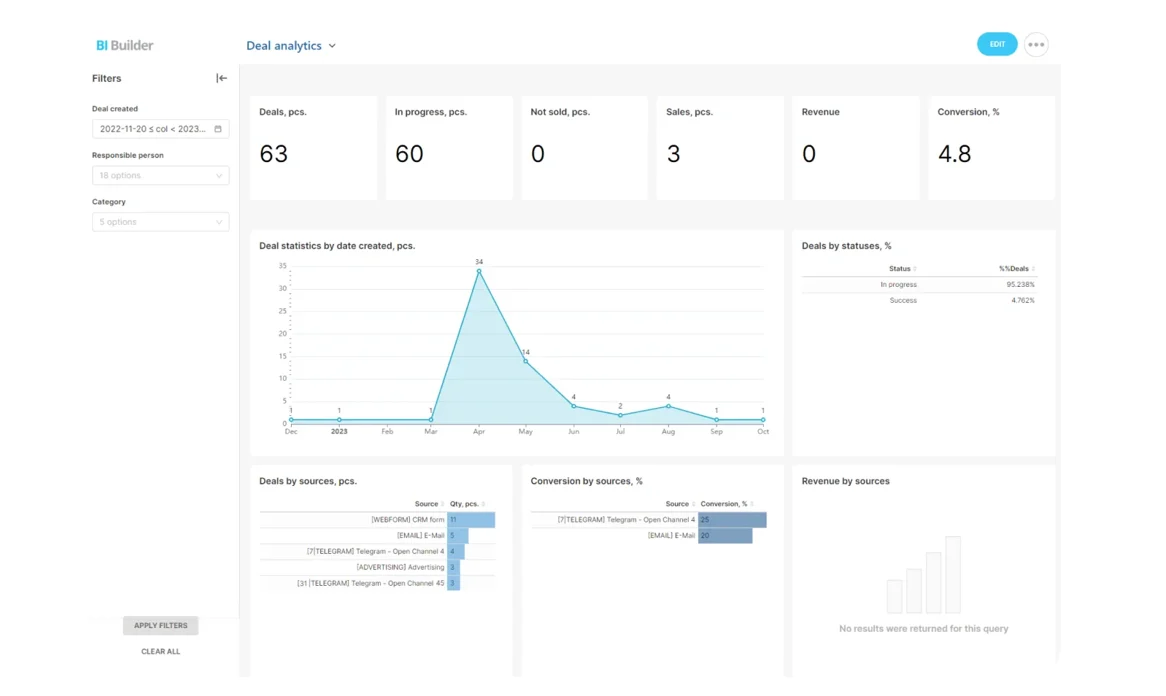
Instead of reacting to problems, you guide quality forward — predicting what’s next rather than chasing what went wrong.
The collaboration factor: bringing suppliers into your QC system
Quality improves fastest when everyone can see the same information. When suppliers are part of your QC process — not outside it — communication becomes clearer, problems are solved earlier, and accountability grows naturally. Collaboration isn’t an extra step in quality control; it’s the structure that holds it together.
Creating shared visibility
Most supplier issues don’t come from bad intent; they come from poor communication. Specs get lost in email threads, updates arrive too late, and feedback never reaches the right person. By bringing suppliers into your QC system, you remove that friction. Everyone works from one version of the truth.
Within a shared workspace, suppliers can:
- Upload inspection results, reports, and supporting media directly
- Receive instant alerts about issues or corrective actions
- Track performance dashboards showing quality and delivery metrics
- Access approved documentation, checklists, and standards in one place
When everyone sees what’s happening in real time, misunderstandings fade. You build transparency, not tension.
Turning collaboration into performance
A connected system also makes supplier improvement continuous. You can comment directly on inspection results, assign follow-up tasks, and track how each supplier responds. Over time, that interaction creates a feedback loop that strengthens performance across your network.
Bitrix24 supports this kind of collaboration by keeping everything — conversations, documents, tasks, and analytics — in one platform. Suppliers know exactly what’s expected, and your team can monitor progress without chasing updates. It’s simple, efficient, and scalable.
Shared visibility isn’t just about monitoring suppliers; it’s about building partnerships that produce reliable quality, fewer returns, and stronger results for everyone involved.
Bitrix24 in action: building quality into the workflow
QC by design becomes powerful when it moves beyond theory. Bitrix24 makes that possible by bringing every part of supplier quality management into one connected system — from automated inspections to real-time collaboration and performance analysis.
One platform, one process
Instead of juggling spreadsheets, messages, and inspection reports, everything happens in a single workspace. When a supplier finishes production, Bitrix24 automatically creates an inspection task, assigns it to the right person, and links all relevant files. Communication stays attached to the record, so feedback, approvals, and photos are easy to trace. Nothing gets lost, and everyone stays aligned.
A practical example
Imagine a manufacturing team preparing for a product launch. One supplier updates a component design, triggering an automatic inspection in Bitrix24. The QC team receives a notification, reviews the update, and adds feedback before shipment. The system logs every action (from inspection notes to supplier responses), giving managers a complete view of performance and compliance in real time.
That visibility means fewer surprises later. If an issue repeats, data from previous inspections reveals when and why it happened, making improvement faster and more targeted.
From daily control to continuous improvement
Bitrix24 automates the routine tasks that keep quality moving while giving you insights to make better decisions. Reports show which suppliers meet expectations, which fall behind, and where processes can improve. Over time, that information shapes stronger supplier partnerships and a more resilient supply chain.
Scaling quality as a growth lever
When quality becomes part of how your business operates, it starts driving growth instead of slowing it down. Each avoided return, each supplier improvement, and each day saved in production turns into measurable progress — faster delivery, stronger margins, and happier customers.
From prevention to performance
Traditional QC measures success by how many problems it catches. But when inspections, supplier data, and communication are unified, you start measuring success differently — by how few problems occur at all. Quality stops being a control function and becomes a performance driver.
Businesses that treat quality as a growth strategy see:
- Lower return and rework rates
- Faster product launches and fewer supply delays
- More consistent brand trust and customer loyalty
- Higher supplier performance and accountability
Turning insight into scale
Once you have consistent visibility into your supply chain, scaling becomes less risky. You can add suppliers, launch new products, or enter new markets with confidence that quality standards will hold. The same automated workflows, inspection rules, and data insights that work for one supplier can be applied to many. Instantly.
Bitrix24 gives you the structure to make that possible. It connects every moving part of the quality process and scales with your business. As volume grows, so does control, visibility, and efficiency. You’re not just improving quality; you’re using it to accelerate growth.
Final thoughts
QC by design isn’t just about avoiding mistakes; it’s about creating systems that make excellence predictable. When your teams, suppliers, and data work in sync, you build more than strong products. You build trust, reputation, and long-term growth. That’s what Bitrix24 helps you achieve: quality that scales with you.
Start building your QC by design system with Bitrix24 and transform every inspection into growth.
Automate your work with Bitrix24!
Save time and boost efficiency with automated workflows, CRM, and task management in Bitrix24.
START NOW FREEFAQs
What is QC by design?
QC by design is a proactive approach to quality control that embeds inspection and verification steps throughout the production process, rather than leaving them until the end. It focuses on preventing errors before they occur, improving supplier accountability, and reducing costly returns.
How does automation improve supplier inspections?
Automation ensures inspections happen at the right time, every time. When key production milestones are reached, tasks, alerts, and approvals trigger automatically. This reduces manual follow-up, improves consistency, and gives you real-time visibility into supplier performance.
What kind of data can be tracked for supplier performance?
With systems like Bitrix24, you can track defect rates, inspection results, supplier response times, and delivery accuracy. Over time, these insights help you forecast risks, improve supplier relationships, and strengthen overall supply chain reliability.
Can Bitrix24 integrate supplier collaboration and QC management?
Yes. Bitrix24 combines task management, communication, and document sharing in one platform. Suppliers can upload reports, respond to feedback, and access approved documentation directly — improving transparency and reducing miscommunication.
Is QC by design suitable for smaller businesses?
Definitely. Smaller companies benefit even more from early-stage quality control, as it prevents waste and strengthens supplier relationships from the start. Bitrix24’s automation tools are scalable, so teams can start simple and expand as operations grow.