Bitrix24 as a Solution to Common Start-Up Hurdles


Most early-stage problems look like funding problems. Day to day, they're actually coordination problems.
A sales update buried in one chat thread. A customer request living in someone's personal notes. A deadline that moves while only half the team hears about it. Leads go unfollowed, handoffs run on memory, documents fork into three versions.
Each is minor on its own. Together, they trip up more startups than weak ideas do.
What a founder wants is a way to cut that drag without taking on enterprise-level complexity.
That's the lens this piece takes on Bitrix24: what it gives a startup, where it earns its place, and where it doesn't.
What Bitrix24 is
Bitrix24 puts the tools most startups are already juggling separately (team communication, task management, CRM, documents, and workflow automation) into one shared environment.
That matters because these functions aren't independent: sales activity affects delivery, delivery affects customer communication, internal decisions ripple into follow-up and reporting.
A platform where they connect cuts the friction that separate apps create.
HBR research found knowledge workers toggle between applications around 1,200 times a day, losing close to four hours a week just reorienting after each switch. For a five-person startup, that overhead is expensive out of proportion to the headcount.
Why Bitrix24 makes sense for startups
Cost
At the early stage, software decisions come down to cost structure more than feature lists. Unused seats and overlapping tools quietly eat into any SaaS budget. A team paying separately for Slack, Zoom, HubSpot, Asana, Google Drive, and Notion is carrying six subscriptions and six renewal dates before the fifth hire, with no one actively managing the stack.
Consolidation saves more than subscription fees. Fewer tools means fewer accounts to manage, fewer integrations to patch, and fewer systems to explain to new hires.
Speed
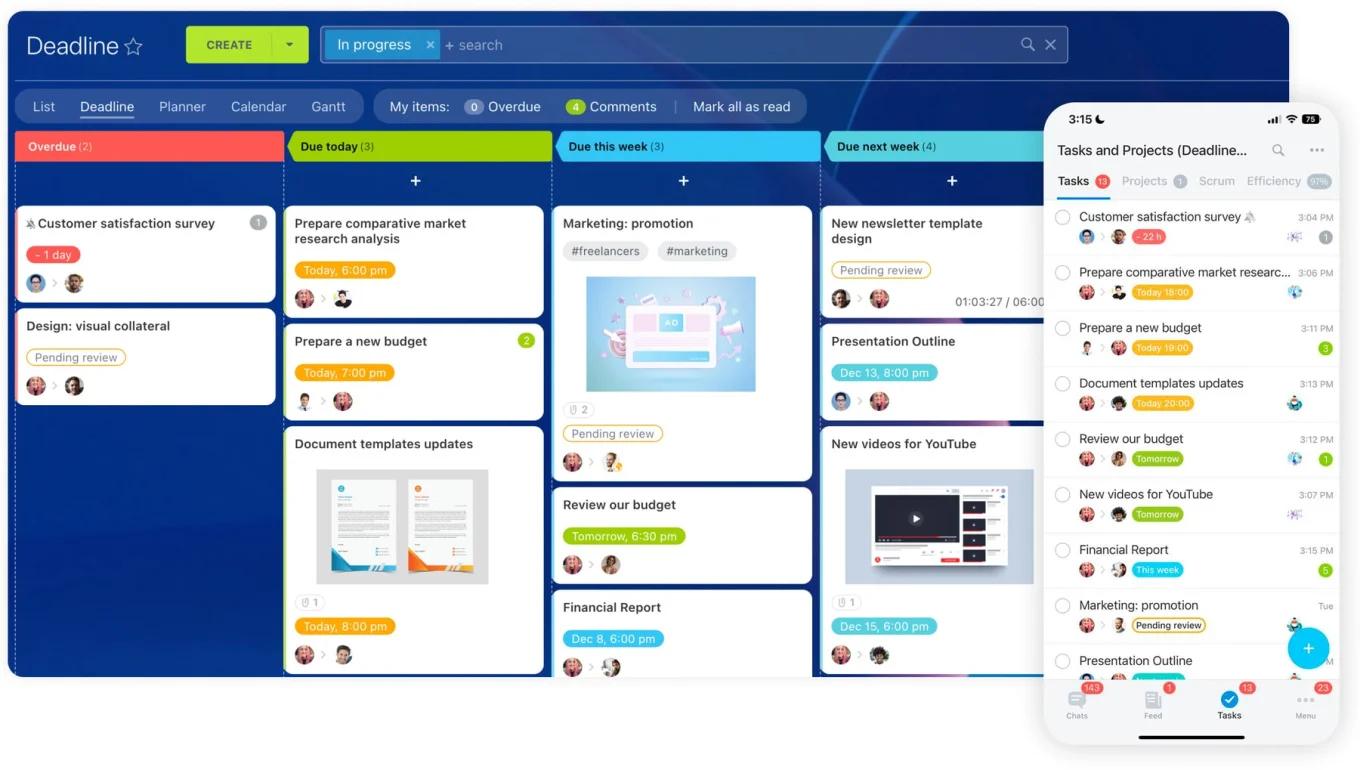
Small teams make faster decisions when they can see the same information. A founder who can review the pipeline, check task progress, and message the team in one place gets quicker turnarounds, and work doesn't stall while people hunt across five apps for context that should have been in one.
Operational clarity
In many startups, informal communication is the default operating model. It works early. Eventually too much depends on who happened to be in the room or on the thread. A central platform cuts that dependence, along with the founder-as-bottleneck dynamic that usually rides with it.
|
Approach |
Typical effect |
|
Several disconnected SaaS tools |
Lower per-tool cost, but higher total spend, more switching, more coordination friction |
|
One multi-use platform |
Broader coverage, simpler administration, better visibility across functions |
30-Day Startup Operations Setup Plan in Bitrix24
Enter your email address to get a comprehensive, step-by-step guide

How Bitrix24 works in practice
Most operational failures in young companies happen at handoffs.
Marketing generates interest but sales doesn't act; sales closes a client but delivery lacks the background; a founder promises a deadline but the task never reaches anyone's workflow.
Work loses its trail at each of those transitions.
In Bitrix24, a new lead lands in the CRM and triggers a follow-up task automatically. Notes, files, and conversation history stay attached as the deal moves. Other people join the workflow without rebuilding context. The activity chain, conversation to record to task to follow-up, stays visible in one place.
Core Bitrix24 capabilities and the hurdles they address
|
Common hurdle |
Bitrix24 capability |
Business effect |
|---|---|---|
|
Communication chaos |
Team chat, video calls, shared workspaces |
Faster alignment, less reliance on scattered messages |
|
Lack of process |
Tasks, project boards, pipelines, automation |
Clear ownership and more repeatable execution |
|
Poor sales visibility |
CRM records, deal tracking, contact history |
Better follow-up, clearer pipeline management |
|
Budget pressure |
Bundled functionality across departments |
Fewer subscriptions, lower tool overhead |
|
Cross-functional confusion |
Shared documents, connected activity, centralized records |
Stronger coordination across founders, sales, ops, and service |
Communication and collaboration
The communication tools keep conversations attached to real business activity instead of floating across WhatsApp threads and personal inboxes no one else can see.

For a small team making fast decisions, the value is simple: information doesn't get lost in transit.
CRM and sales visibility
The CRM is where inconsistency costs the most revenue. A founder-led sales team tracking deals in a spreadsheet tends to lose the thread: where a conversation left off, who sent the last email, which leads went cold after a promising first call.
With contact history, lead status, next actions, and deal progress visible to the whole team, follow-up becomes dependable instead of dependent on whoever remembers.
Tasks and project management
Task and project tools turn informal promises into assigned work with owners, deadlines, and status.
That matters most when a team is juggling customer delivery, internal initiatives, and growth projects at once, the exact moment things fall between chairs.
Automation
Once patterns emerge (lead routing, approval steps, reminders, stage changes), task automation strips out manual coordination. A trigger that creates a follow-up task when a deal hits "Proposal Sent" removes a whole category of human error.
In fact, lightweight automation tends to be where startups see the fastest return.

Common misconceptions
"All-in-one platforms are for bigger companies"
Early-stage teams often gain the most from centralization: they have the least time to manage software complexity and rarely have an ops person stitching tools together. The assumption is that sophistication scales with team size.
The reverse is closer to true. A ten-person company with no shared system is harder to coordinate than a fifty-person company with one.
"Startups don't need processes yet"
What they don't need is heavy process. A clear owner, a visible task, and a defined sales stage are minimum coordination, not bureaucracy. The failure mode is untracked commitments that quietly slip, not too much structure.
"Flexibility means no system"
Flexibility without shared tracking turns into hidden work, inconsistent follow-up, and founder dependency, where one person becomes the bottleneck because they hold the only complete picture. That's not flexible. It's fragile.
The real limit
Broad platforms aren't magic. Bitrix24 still needs internal agreement on how work gets tracked, who owns what, and how progress gets reviewed. Teams that switch everything on day one without agreeing on conventions tend to abandon it within weeks.
The software is the container; the team decides what goes in it.
Where Bitrix24 delivers in practice
Founder-led sales and business development
A founding team can keep investor contacts, prospects, partners, and customers in one CRM, each relationship type organized without separate tools. That continuity matters during fundraising or early business development: a cold trail in the CRM usually means a cold relationship.
Product launches
A startup can run launch planning through task boards, assign owners across marketing and product, store documents centrally, and keep communication tied to the work rather than scattered across Slack channels and email.
A launch that used to need a weekly coordination meeting can often run asynchronously, which helps when the team spans time zones.
Lean client-facing teams
Small agencies, consultancies, and B2B services firms benefit because selling and delivering are tightly linked. Bitrix24's customer service tools let a small team handle inbound leads, track proposals, schedule follow-ups, and coordinate delivery without buying a separate system for each stage.
Remote-first and async teams
Asana's Anatomy of Work Index found knowledge workers spend 58% of their time on coordination, chasing updates, searching for information, switching apps, rather than the work itself. That overhead bites harder when the team is distributed.
A connected workspace cuts it, and makes it easier for work to continue when one person is traveling, another is in a different time zone, and the founder is between meetings.
Scaling with Bitrix24
A startup doesn't need to switch everything on at once. The usual path: start with communication and task management, then layer in CRM, automation, and reporting as the business gets more complex.
The 11-to-50-employee stretch is a known danger zone, the point where informal coordination starts to break down, which is exactly when more structure pays off.
What gets easier as you grow
Migration risk drops. Starting in one platform means fewer migrations later; adding structure inside a familiar system beats replacing several disconnected tools after habits have set.
Management visibility improves. Leaders move from ad hoc check-ins to clear views of pipeline, execution status, and workload, useful once the founding team can't personally watch everything.
Onboarding speeds up. New hires settle in sooner when customer data, tasks, communication, and documents already live in one place. They don't have to ask which app holds which piece of context.
Not every team will use every module, and they shouldn't feel pushed to. The breadth can feel like a lot for a five-person company on day one.
The scaling logic is to run one platform that grows with the business, not to use all the features. For most startups, that's the more sensible proposition.
Cut startup coordination drag with Bitrix24
Run CRM, tasks, chat, files, and automation in one workspace so small teams follow up faster and scale with clearer ownership.
Start NowFAQ: Is Bitrix24 right for your startup?
Is Bitrix24 suitable for very small teams?
Yes. Small teams often benefit most: they need broad functionality without paying for a full tool stack. The one condition is a willingness to track work in a shared way rather than as a personal to-do list.
Does it work for remote-first startups?
Yes. A connected workspace is especially useful when communication, documents, and tasks have to stay visible across locations and time zones.
Is it a good fit for service-based startups?
Often. Service businesses usually need sales tracking, proposal follow-up, internal coordination, and delivery visibility in one place, which a multi-use platform handles without extra integrations.
Can founders use Bitrix24 instead of several low-cost tools?
In many cases. It depends on whether replacing multiple tools reduces switching, simplifies management, and improves visibility. For small teams that trade usually pays off.
Is Bitrix24 affordable for startups?
The right comparison is one broad platform against the total cost of several separate subscriptions plus the overhead of managing them, not one app against another. Explore Bitrix24 pricing plans.
Will it feel like too much before formal operations exist?
Not necessarily. Startups don't need formal operations to benefit from shared records, task ownership, and clearer communication. Adopt the parts that fit the current stage and leave the rest for later.
Start for free or explore Bitrix24's plans.